
Social Media Manager Daily Checklist: What to Do, and How Long Each Takes
· 8 min read · by Jan Oršula
A social media manager's daily checklist has seven tasks, and for one brand they take about 40 minutes: clear the inbox, check that today's posts are right and yesterday's went out, watch the first hour after a post goes live, scan for mentions of the brand, spend ten minutes engaging with other accounts, note the questions people asked, and sweep the inbox again before you stop. Everything else (planning, approvals, analytics, reports) belongs on a weekly or monthly list, and most of the stress in this job comes from doing those every day instead. Below is the routine with a time budget for each task, a freelancer's real day across three clients, and a printable version.
Social media manager checklist (PDF, one page)
Daily, weekly and monthly lists with time budgets. Print it or keep it open next to the inbox. No sign-up.
Download the checklist
The daily checklist (about 40 minutes per brand)
1. Clear the inbox first (10 minutes)
DMs, comments, mentions and reviews, oldest first. This comes first because questions have been sitting overnight, and a customer who asked about opening hours at 10pm is the one most likely to buy today. Answer what you can, pass on what you can't (refunds, complaints, anything legal) to the person who owns it, and hide or delete what breaks your moderation rules.
2. Check today's posts, and yesterday's (5 minutes)
Two questions. Did yesterday's scheduled posts actually go out? If one didn't, the troubleshooting guide covers the usual reasons. And does anything going out today now read badly because of the news, a local event or something that happened to the brand overnight? Pausing a post takes a minute. Explaining why it went out takes a lot longer.
3. Be there for the first hour after a post goes live (5 minutes)
Not the whole hour, just a check-in shortly after it publishes. Reply to the first comments while people are still looking at the post, answer the questions it raised, and pin a useful comment if the platform allows it. Commenters are most likely to come back and reply while the post is fresh, so this is when a quick answer is most likely to turn into a conversation.
4. Scan for mentions you weren't tagged in (5 minutes)
Search for the brand name, common misspellings and the main product names. Plenty of complaints and praise never tag the account. This is also your early warning: a complaint that's picking up replies at 9am is much easier to handle than the same one at 5pm. If something looks like it's spreading, switch to your crisis plan. The social listening guide covers setting up saved searches so this takes minutes, not a scroll through every app.
Kadenzo
Steps 1 to 4 from one screen
Comments from six networks and Instagram and Facebook DMs in one inbox, a calendar that flags any post that didn't go out, and listening that brings back brand mentions nobody tagged. All on the Starter plan, from $19 a month.
5. Engage outward (10 minutes)
Leave real comments on posts from customers, partners and accounts your audience follows: five comments that add something to the conversation, rather than a row of emoji. This is the part of the job that's easiest to skip, and it's one of the steadiest ways to pick up new followers, because people check out the profile of someone who said something useful under a post they cared about.
6. Write down what people asked (2 minutes)
Every question from the inbox and the comments goes into the idea list for next week's content. "Do you do gluten-free?" asked three times this week is a post. This is the cheapest source of ideas you'll ever have, and it's gone by tomorrow if you don't note it.
7. Sweep the inbox before you stop (5 minutes)
One more pass so nothing answerable waits overnight. If someone else covers evenings or weekends, leave a one-line note on anything still open.
What not to do every day
Most "always busy, never done" days come from daily habits that belong on a slower schedule:
- Checking analytics for decisions. One day of numbers is noise. Look weekly, decide monthly.
- Re-planning the calendar. Move a post if the news demands it; otherwise the plan you made on Monday stands until next Monday.
- Chasing approvals one post at a time. Agree a weekly approval window and stop chasing.
- Jumping on every trend. Note the ones that fit and decide on them in the weekly planning slot.
- Watching follower counts. They move slowly and say little about whether the account is working.
The weekly checklist
- Plan and batch (60 to 90 minutes, once). Turn the idea list into next week's posts and make them in one sitting. The batching guide and the content calendar guide cover the method.
- Send for approval (15 minutes). One batch, one deadline.
- Check the numbers (20 minutes, end of week). Which posts beat your usual results and which fell short, against your own baseline, not anyone else's.
- Tidy up (10 minutes). Archive finished conversations, update the saved replies you used most, and save the week's best posts as examples.
The monthly and quarterly checklist
- Monthly report (1 to 2 hours). What you planned, what happened, what it achieved and what changes. The monthly report guide has a structure clients actually read.
- Links and tracking (15 minutes). Click every bio link and check the tracking tags still work.
- Quarterly audit (90 minutes). Access, positioning, content mix, performance and tracking, using the timed audit checklist.
A worked example: one freelancer, three clients
Ana is a freelance social media manager with three clients: a dental clinic (Facebook and Instagram), a coffee roaster (Instagram and TikTok) and a yoga studio (Instagram and Facebook). Her routine across all three takes a little over two hours a day. The rest of her day goes on making content and talking to clients.
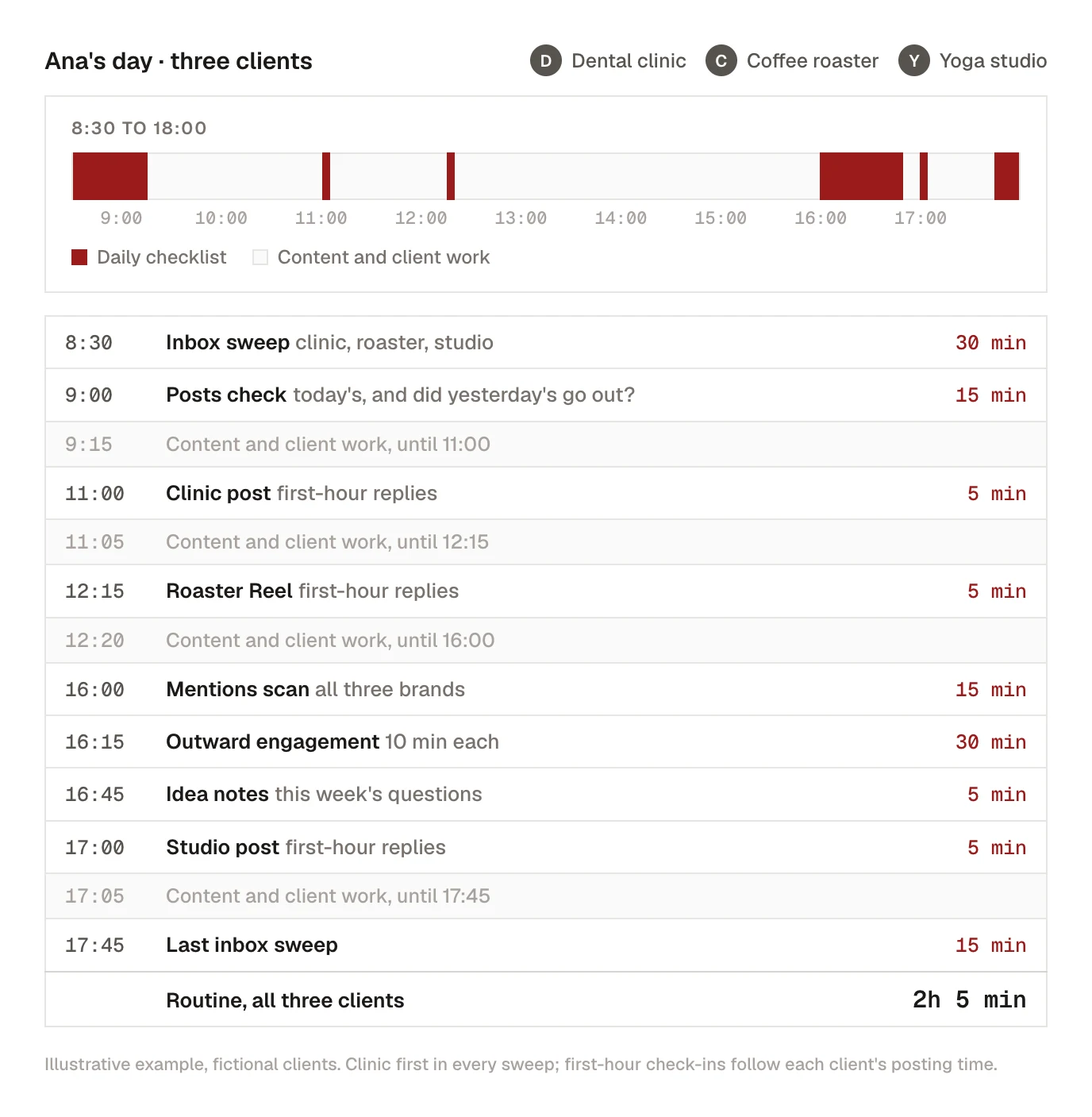
Three things make it work across clients:
- The same order for every client, every day. Dental clinic, then coffee roaster, then yoga studio, one browser profile or workspace at a time. Switching between clients mid-task is how replies end up on the wrong account; the multiple clients guide covers keeping them apart.
- First-hour check-ins follow the posting schedule, not the clock. The roaster's Reel goes out at 12:00, so Ana checks it at 12:15. The yoga studio posts at 16:45 for after-work classes, so that check-in is at 17:00.
- The clinic's inbox gets priority. Patients asking about appointments need an answer before the afternoon, so the clinic comes first in every sweep. Ranking clients by how time-sensitive their messages are decides who comes first in each sweep.
Kadenzo for social media managers
The 40-minute routine, without opening ten apps
Clear every client's comments in one inbox, check the week on one calendar, and scan mentions from one feed, then get on with the work that makes the content. Plans from $19 a month; client profiles for several brands start on Professional.
Frequently asked questions
What does a social media manager do every day?
Seven things: clear the inbox, check today's posts and confirm yesterday's went out, reply in the first hour after a post goes live, scan for untagged mentions, comment on other accounts, note the questions people asked, and sweep the inbox again before finishing. Planning, approvals, analytics and reports belong on weekly and monthly lists.
How many hours a day does social media management take?
The daily routine takes about 40 minutes per brand. Content creation, planning and client communication come on top, which is why most managers handle more than one account per day. A freelancer with three clients spends a little over two hours on the routine and the rest of the day making content.
How often should a social media manager check analytics?
Weekly for a quick look at which posts beat your usual results, and monthly for decisions and the report. Checking every day mostly shows you noise and leads to changing plans that needed more time to work.
How do you manage the daily checklist for multiple clients?
Run the same tasks in the same client order every day, one client at a time, and give the most time-sensitive inbox priority. Time the first-hour check-ins to each client's posting schedule rather than doing them all at once.