
How to Grow on TikTok as a Beginner: A 30-Day Plan
October 29, 2026 · 11 min read · by Jan Oršula
To grow on TikTok as a beginner, pick one topic, post short original videos on it several times a week, make the first two seconds count, and use your analytics to do more of whatever people watch to the end. That works from zero followers because TikTok recommends videos by interest, not by how big the account is: the company says follower count isn't a direct factor in its For You feed. What holds most new accounts back is less mysterious: videos TikTok won't recommend at all, no clear topic for the feed to learn, and giving up before the data arrives. This guide explains how the feed picks videos, then walks through a 30-day plan for one example account.
How TikTok decides who sees a new account's videos
TikTok has described its For You recommendations in its own words, in a newsroom post on how it recommends videos. The system weighs three groups of signals:
- What viewers do: the videos they like, share, comment on, follow from, and watch to the end.
- What the video contains: captions, sounds, hashtags and the topic itself.
- Device and account settings: language, country and device type, which get less weight because they aren't preferences a viewer chose.
Some signals count more than others. TikTok's example of a strong one is whether someone finishes a longer video. And it says plainly that neither follower count nor a history of past hits is a direct factor.
For a beginner, that last line is the most useful thing to know about the platform. A new video gets shown to a small group of people likely to be interested. If they watch it through and react, TikTok shows it to more people like them. A 40-follower account can reach thousands of viewers on a single video, which almost never happens on Instagram or YouTube at that size.
Is it easy or hard to grow on TikTok?
Easier to get views than on most platforms, and harder to turn them into a following. Because the feed is interest-based, a beginner can have one video reach 50,000 people and still gain only a handful of followers, since viewers had no reason to expect a second video they'd want. Growth comes from being recognizable: a clear topic and a format people want more of. That's why the plan below starts with choosing one, and why "post anything and hope" usually stalls.
Before you post: the eligibility check
TikTok has For You feed eligibility standards, and a video that fails them stays on your profile but isn't recommended to new viewers. For a beginner, that's close to invisible. The ones new accounts trip over most:
- Reposts without new work. Uploading something you didn't make, or re-uploading a clip with no meaningful edit, counts as unoriginal.
- Someone else's watermark or logo. The classic case is reposting your Instagram Reel with the Instagram watermark still on it. Export the original file instead.
- Very low-effort clips. Extremely short videos and slideshows that add little are treated as low quality.
Two more checks before you publish:
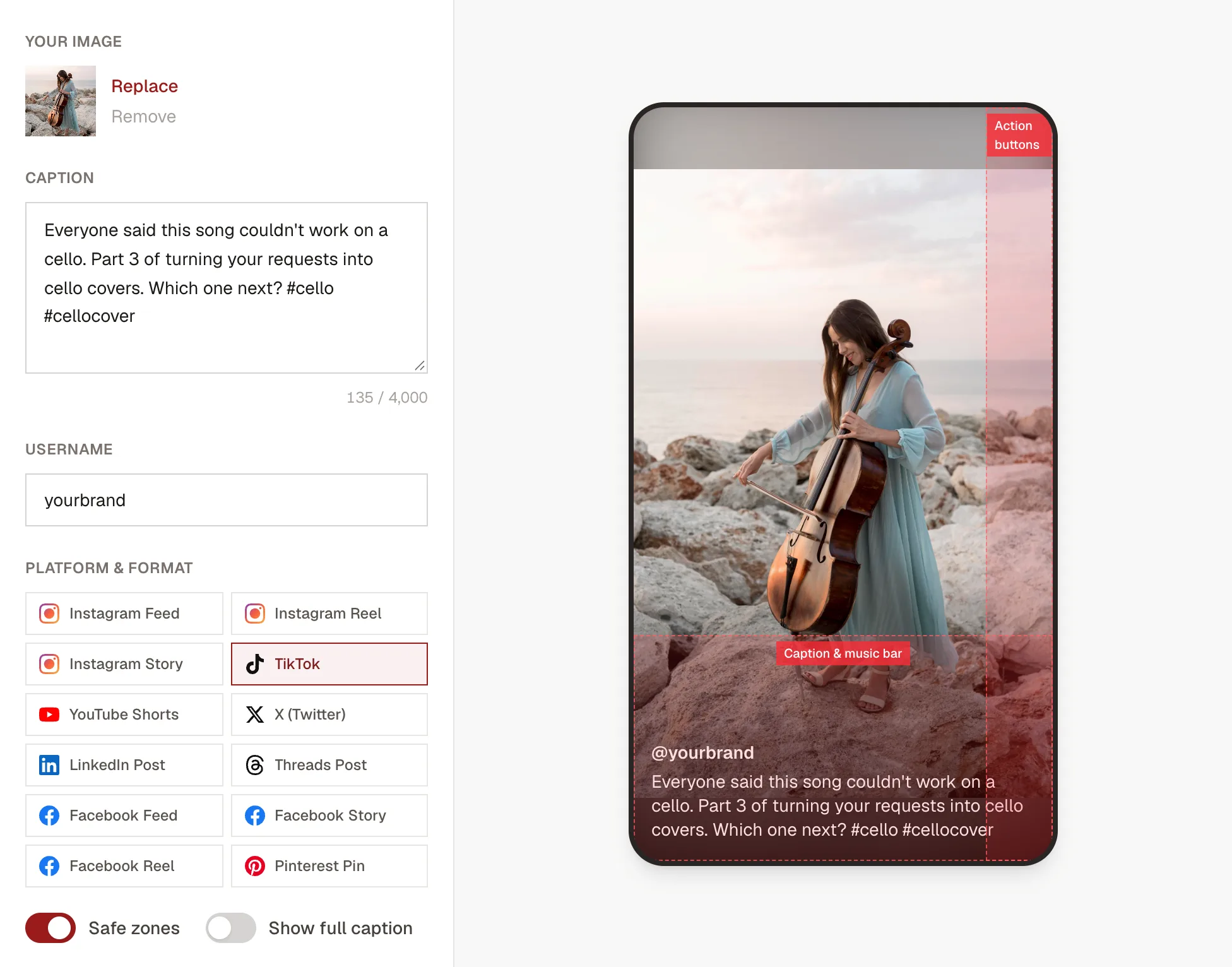
- Keep text out of the covered areas. TikTok's buttons sit down the right side and your caption covers the bottom of the screen. On-screen text placed there is half hidden. The free post previewer overlays those zones on your own frame:
- Know your account type. Business accounts can only use sounds from TikTok's Commercial Music Library, and they can't join the Creator Rewards Program. If you're an individual creator, a personal account keeps more options open.
If a video is ever marked ineligible, TikTok lets you appeal it. Our guide to why TikTok removes videos covers removals and appeals in more detail.
A 30-day plan to grow on TikTok from zero
To make each step concrete, take a cellist starting a TikTok from scratch. They play classical repertoire, but they also enjoy arranging pop songs, and they have about five hours a week for TikTok.
Week 1: choose one topic and a format you can repeat
The feed needs to learn who your videos are for, and it learns faster when every video sends the same signal. Pick one topic narrow enough to be recognizable and broad enough for 50 videos. Then pick a format, a shape your videos repeat, so viewers know what they'll get if they follow.
The cellist's choice: pop songs people request, arranged for cello, as a numbered series ("Part 3 of turning your requests into cello covers"). The topic is clear, the series gives viewers a reason to follow for the next part, and the requests in the comments supply next week's ideas.
Set up the profile to match. Put the topic in the bio in plain words people might search ("Pop songs on cello, requests open"), use a clear face photo, and add a link once you have somewhere useful to send people.
Weeks 1 to 4: post on a schedule you can keep
TikTok's own advice to publishers is that posting more often brings more For You exposure, but also that quality matters more than rushing. For a beginner with limited time, a sustainable rhythm beats a burst: three to five videos a week for the first month gives the feed enough to learn from and gives you enough results to compare. The cellist batch-films on Sunday: four short covers, 30 to 60 seconds each, posted across the week.
Timing matters less on TikTok than on most platforms, because videos keep getting recommended for days. Published studies don't agree much, either:
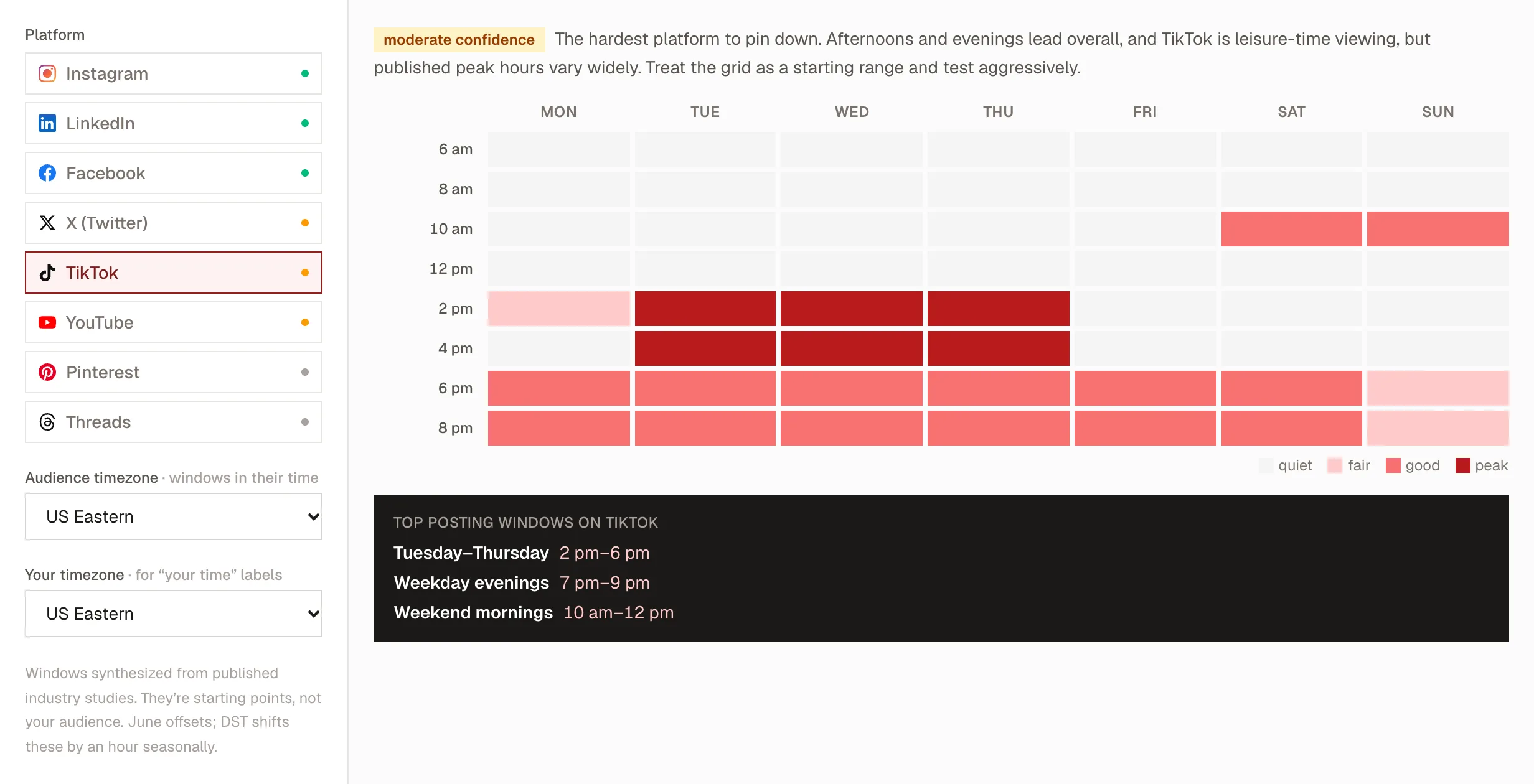
Start in those windows, then switch to your own data once you have some (TikTok's analytics show when your followers are on the app). If you want to keep the rhythm without posting live every day, you can film in batches and schedule the videos. Kadenzo is one tool that schedules TikTok posts, and TikTok's own desktop uploader can schedule too.
Every video: make the first two seconds count
Strong signals like finishing a video only happen if people don't swipe away first. Open on the most interesting moment, not an introduction. The cellist doesn't start with "Hi, today I'm going to play...". They start on the first recognizable bar of the song, with the title as on-screen text, so viewers know within a second whether they want to hear more. Our guide to TikTok hooks covers openers that work and the ones that lose people.
Every video: give TikTok words to read
TikTok is used as a search engine, and the company says searches keep growing. Say the topic out loud, put it in the on-screen text, and use the words a searcher would use in the caption ("cello cover of [song name]"). Where it's available in your region, TikTok's Creator Search Insights shows topics people search for that have few videos, which are good ideas for a new account. Our TikTok SEO guide goes deeper.
Every week: talk to the people who show up
Reply to comments, especially early ones, and turn good questions into videos: TikTok lets you reply to a comment with a video, which shows the original comment on screen. The cellist's request series runs on exactly this. Stitches and Duets with bigger creators in your topic can also put you in front of their viewers, as long as you add something of your own.
Week 4: read the numbers and double down
After a month you'll have 12 to 20 videos, enough to see a pattern. In your analytics, look at each video's:
- Average watch time and the share who watched the full video. The clearest sign a video worked. Compare like with like, since a 20-second video is easier to finish than a 90-second one.
- Traffic source: For You, Search, your profile or following. A video mostly found through Search is a topic people actively look for.
- New followers from the video. Views without follows usually mean the video was fun but didn't promise more of the same.
The cellist finds that covers of songs from the last two months hold viewers longest, and that videos opening on the chorus beat videos opening on the verse. So month two is more recent songs, all opening on the chorus. That's the whole method: small tests, kept or dropped based on watch time. Our explainer on what counts as a view on TikTok helps you read the numbers correctly.
Can you grow on TikTok without paying?
Yes. Since follower count isn't a direct factor, a new account's videos get the same chance to be tested on new viewers as anyone else's. TikTok's paid Promote feature can buy extra views for a post, but it doesn't fix a video people swipe past, and paid views tell you less about what your audience actually wants. Get a few videos working on their own first.
How long does it take to grow on TikTok?
There's no official answer, and anyone promising a number is guessing. What you can control is how quickly you learn: with three to five videos a week, you'll have enough data after a month to see what's working, and most accounts that grow steadily are the ones that kept a single topic through the first few months instead of switching after two quiet weeks. Our guide to growing a following without buying one covers why followers lag behind the work.
When can you get paid on TikTok?
The Creator Rewards Program is TikTok's main payout for views. According to TikTok's eligibility rules, you need to be 18 or older, have at least 10,000 followers and 100,000 video views in the last 30 days, use a personal account in good standing, and be in an eligible country. Only original videos longer than one minute earn. That's a milestone, not a starting point, but it's one more reason to get comfortable with videos over a minute long once your short ones are holding viewers.
Frequently asked questions
Does follower count affect the TikTok algorithm?
Not directly, according to TikTok. Its recommendations are based on what viewers watch and interact with, what a video contains, and some device and account settings. That's why a small account's video can reach far more people than its follower count, and why a big account's weak video can flop.
How often should a beginner post on TikTok?
Three to five times a week is a sustainable start for most people with a job or a business to run. TikTok's guidance for publishers says more frequent posting brings more exposure but that quality matters more than rushing, so choose a rhythm you can keep for months, not one you can manage for a week.
Why are my TikTok videos getting zero views?
Check eligibility first: reposted content, another platform's watermark or very short, low-effort clips can keep a video off the For You feed. Then check the account: a new or recently restricted account may get small test audiences. If the videos are original and eligible, the opening is usually the problem, since viewers who swipe away in the first seconds stop the video being shown further.
Should I use a personal or business account on TikTok?
Individual creators usually do better with a personal account: it keeps the full sound library and access to the Creator Rewards Program. Businesses that need commercial features use a business account and choose sounds from TikTok's Commercial Music Library, which is cleared for commercial use.
Is it too late to start on TikTok in 2026?
No. Because the feed recommends videos by interest rather than account size, new accounts still get tested on new viewers every day. In the US, TikTok now runs through a joint venture formed in January 2026, and no confirmed change to how it ranks videos has been reported, so the basics in this guide still apply.